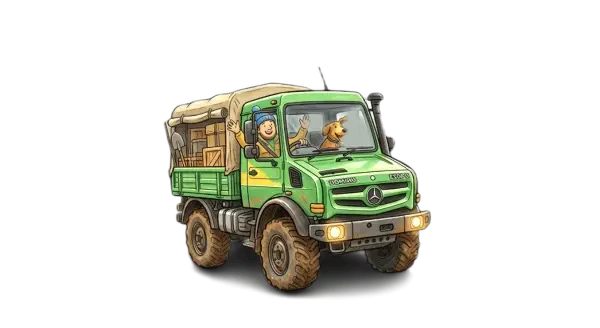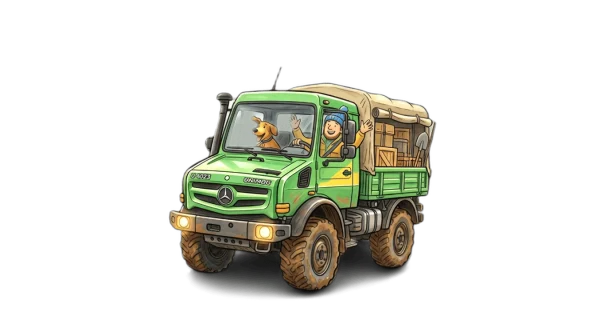
It was to help farmers that the Unimog was created just after World War II. Food shortages at the time drove the development of this agricultural vehicle. That heritage is still part of its DNA today. The Unimog continues to provide immense value to farmers lucky enough to own one — or several, on larger operations. The Unimog has qualities that ordinary tractors simply lack, and here is why.
What farmers need from a vehicle
Farmers and agricultural service companies need fast, efficient vehicles capable of covering ever-greater distances at maximum profitability. Thanks to its characteristics, the Unimog performs equally well in fieldwork and road transport:
- on one hand, outstanding off-road capability and low ground pressure,
- on the other, safety and a high cruising speed.
All of this combined with an impressive payload and high traction power. The Unimog handles complex tasks with low fuel consumption and delivers high utility at a low cost per kilometre.
The Unimog as an implement carrier
The Mercedes-Benz Unimog is designed to be used with implements, and that is where its many practical advantages lie. Its safety and reliability, combined with exceptional competence in complete systems, have made the Unimog the professional implement carrier of choice for more than 70 years.
This “universal motorised device” — the translation of its original name — was developed in close cooperation with a large number of body builders and implement manufacturers to offer a system unmatched in flexibility and productivity. And even with all these capabilities, it offers extremely compact dimensions that allow it to deploy its full effectiveness practically anywhere.
Built at the world’s largest truck assembly plant in Wörth, Germany (where all Mercedes-Benz special trucks are manufactured with largely identical components), the new Unimog meets the high standards of the commercial vehicle industry.
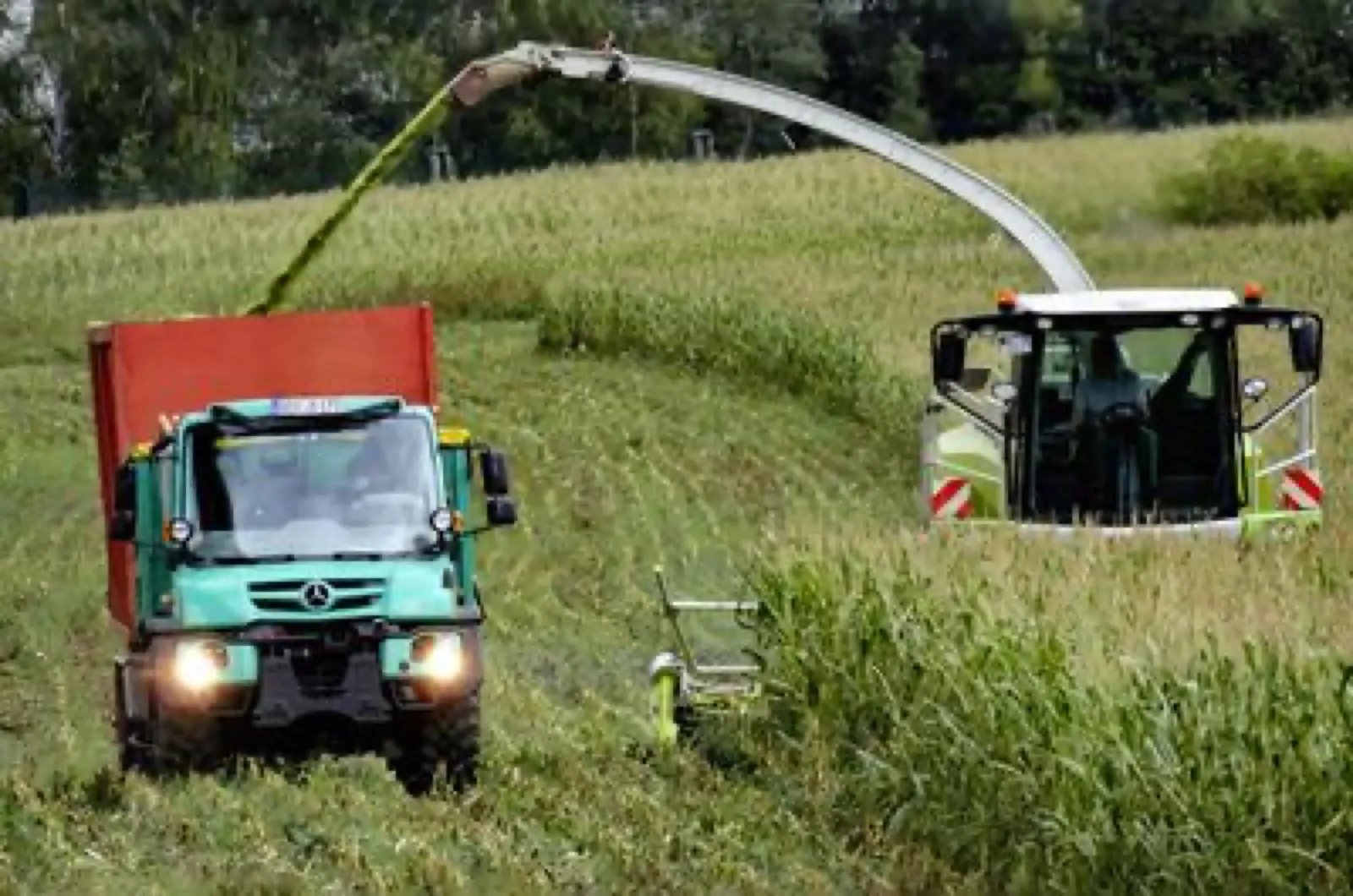
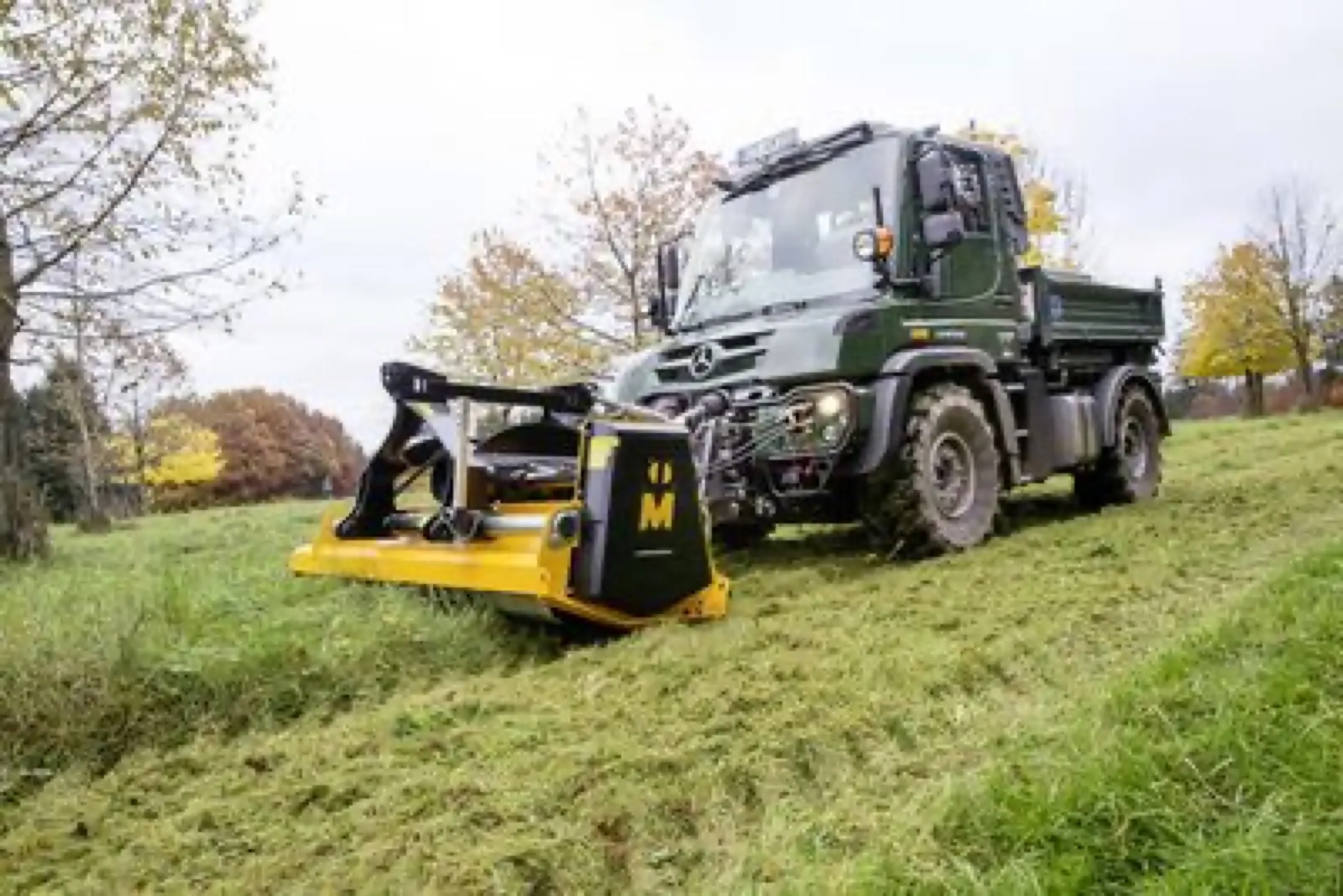
The Unimog as an agricultural tractor built for every task
Thanks to a technically proven chassis concept based on a robust ladder frame, the Unimog can handle any situation, however complex. Its distinctive features include:
- permanent all-wheel drive,
- high ground clearance thanks to portal axles,
- high driving comfort,
- high axle articulation capability,
- differential locks on both axles.
Single tyres, the Tirecontrol Plus tyre pressure regulation system, and optimal weight distribution let you travel with great efficiency even far from tarmac, at speeds of up to 90 km/h on the road.
The Unimog’s reputation as a tireless worker is more than justified: it delivers maximum performance across the most diverse disciplines 365 days a year. The four attachment points of the Unimog contribute to this, one of the vehicle’s defining characteristics. Hydraulic, mechanical, and electrical implement drives enable particularly flexible working and provide the right power for each of the more than one thousand possible tasks.
Integrated systems: more than a thousand implements and applications
The Mercedes-Benz Unimog can handle an impressive range of applications in the agricultural and forestry sectors. It is a highly versatile and unique platform for a wide range of uses throughout all seasons of the year. Thanks to decades of cooperation with body builders and implement manufacturers worldwide, Mercedes-Benz has concentrated the most advanced experience and know-how in the Unimog, which is the key to delivering modular solutions tailored to every need on a farm.
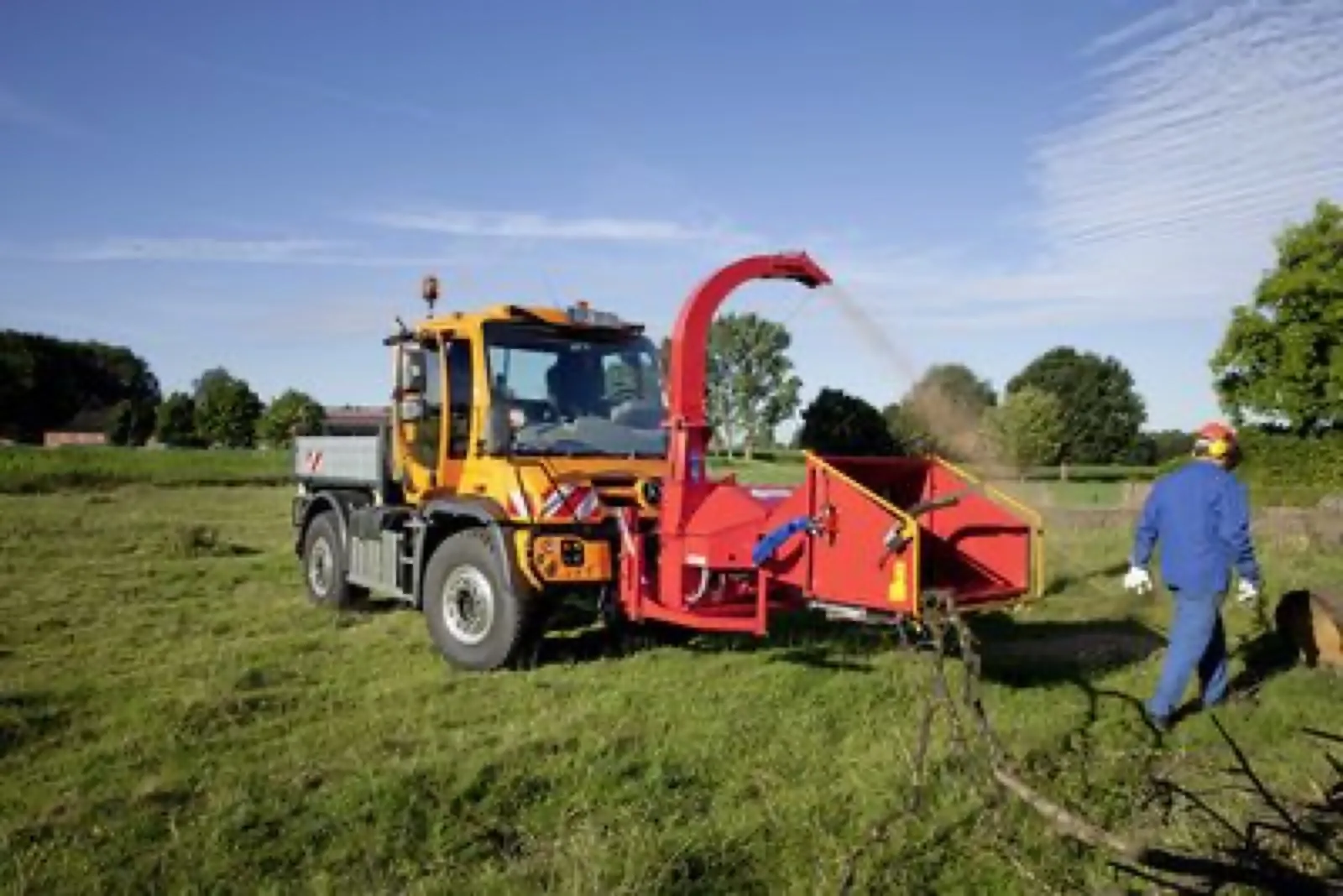
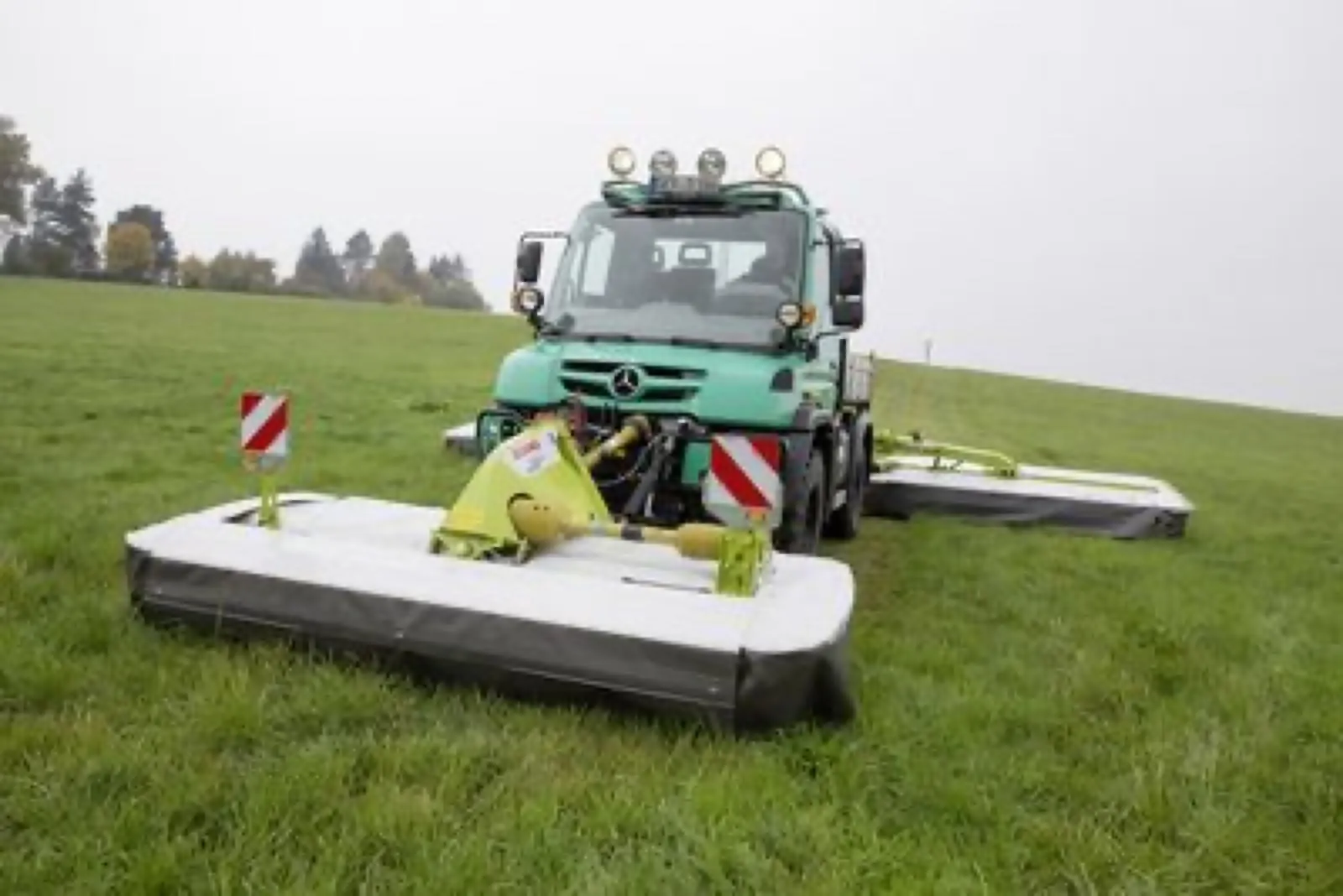
For the agricultural sector, the Unimog performs the functions of a tractor to which the most varied implements can be attached, such as:
a seed drill, a sprayer, a three-sided mower, a compactor and a work platform, a rear excavator, a spreader, a water tank, front hydraulic linkage, a tipping body, an irrigation arm, a compactor/leveller, a tandem mower, a brushcutter, a wood chipper, forestry equipment, and a large number of agricultural logistics applications and tasks.
Compactness and manoeuvrability
Compact dimensions and manoeuvrability are two classic qualities of this implement carrier, whose first prototype dates from 1946 and which has reached its peak of development with the current generation. The engineers at Mercedes-Benz Special Trucks have further reduced the already extremely short wheelbase by cutting the turning circle diameter. The characteristic short front end, low overall height, and narrow width are all still present in the new generation. However, the Unimog must not only deliver power on the road — it must also be able to move in confined spaces. The new generation therefore enables even more productive working, since driving in narrow lanes or manoeuvring in very tight spaces is now even easier and therefore faster. It is one of the most compact agricultural vehicles in its weight and power class.
Photo credits: Mercedes-Benz AG