The Unimog holds a unique position in the railway world. Thanks to its road wheels and retractable rail guide rollers, it travels equally well on asphalt and on tracks, with no transhipment or additional equipment required. This bimodal capability makes it an indispensable tool for rail network operators across Europe.
A Road-Rail Bimodal Vehicle
The railway version of the Unimog is fitted with retractable steel rollers that rest on the rails while keeping the tyres in contact with the track surface. The driver can reach a worksite by road, move onto the track, carry out the work, and then return to the ordinary road in a matter of seconds, without leaving the cab.
This bimodal principle eliminates the need for dedicated shunting locomotives and flat wagons to transport equipment. It significantly reduces logistics costs and track possession times.
Track Maintenance and Renovation
Network operators such as SNCF, SNCB, Infrabel and DB call on the Unimog for a wide range of track work:
- Brushcutting and mowing of verges and embankments along the tracks
- Line inspection using platforms or articulated booms mounted as tool carriers
- Material distribution (ballast, sleepers, fastenings) along the worksite
- Snow clearing of switches in winter, with adapted blades or blowers
- Rail welding and grinding work using specialised attachments
The front, mid-mounted and rear power take-offs of the Unimog allow several hydraulic or mechanical implements to be powered simultaneously, optimising every pass along the track.
Wagon Shunting
The Unimog is also used as a light tractor for shunting wagons in marshalling yards, maintenance workshops and industrial sidings. Its four-wheel drive and high torque allow it to move consists of several tens of tonnes on gently sloping or curved track.
This use is common in ports, factories and rail depots where the flexibility of a compact vehicle is preferable to a conventional locomotive.
Emergency Response and Breakdown Assistance
In the event of a line incident, the Unimog can respond quickly from the road without waiting for a maintenance window to be opened in the timetable. It can carry breakdown equipment, tow a failed rail vehicle or provide demarcation of the intervention zone. Its high-visibility cab and all-terrain capabilities allow it to operate in difficult conditions, including at night or in bad weather.
The Ideal Solution for Secondary Networks
On low-traffic lines, industrial tracks and private sidings, the Unimog is often the most cost-effective solution. It advantageously replaces a dedicated locomotive whose purchase and maintenance costs would be disproportionate for occasional use. A single versatile vehicle is enough to handle track maintenance, material transport and wagon shunting throughout the year.
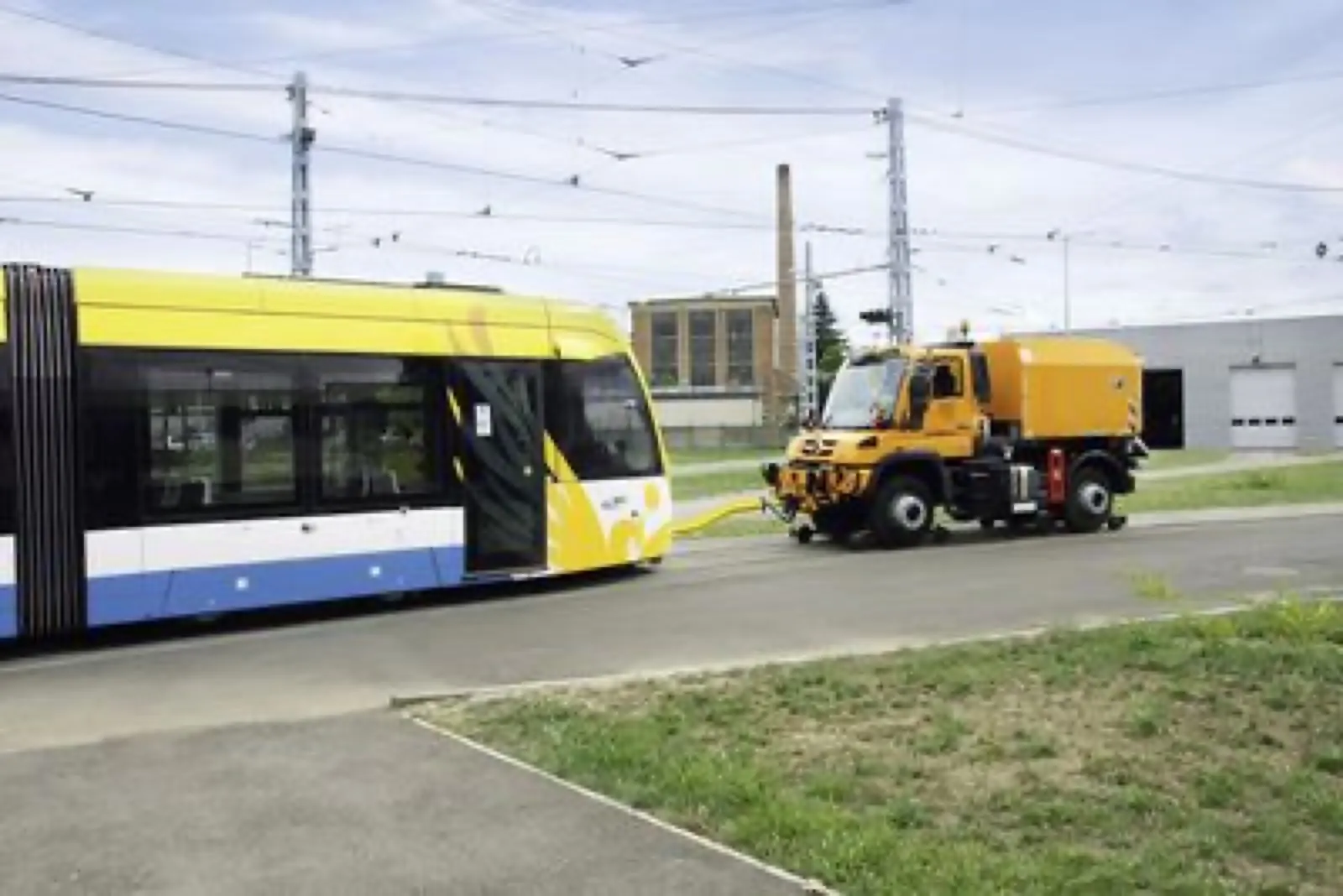
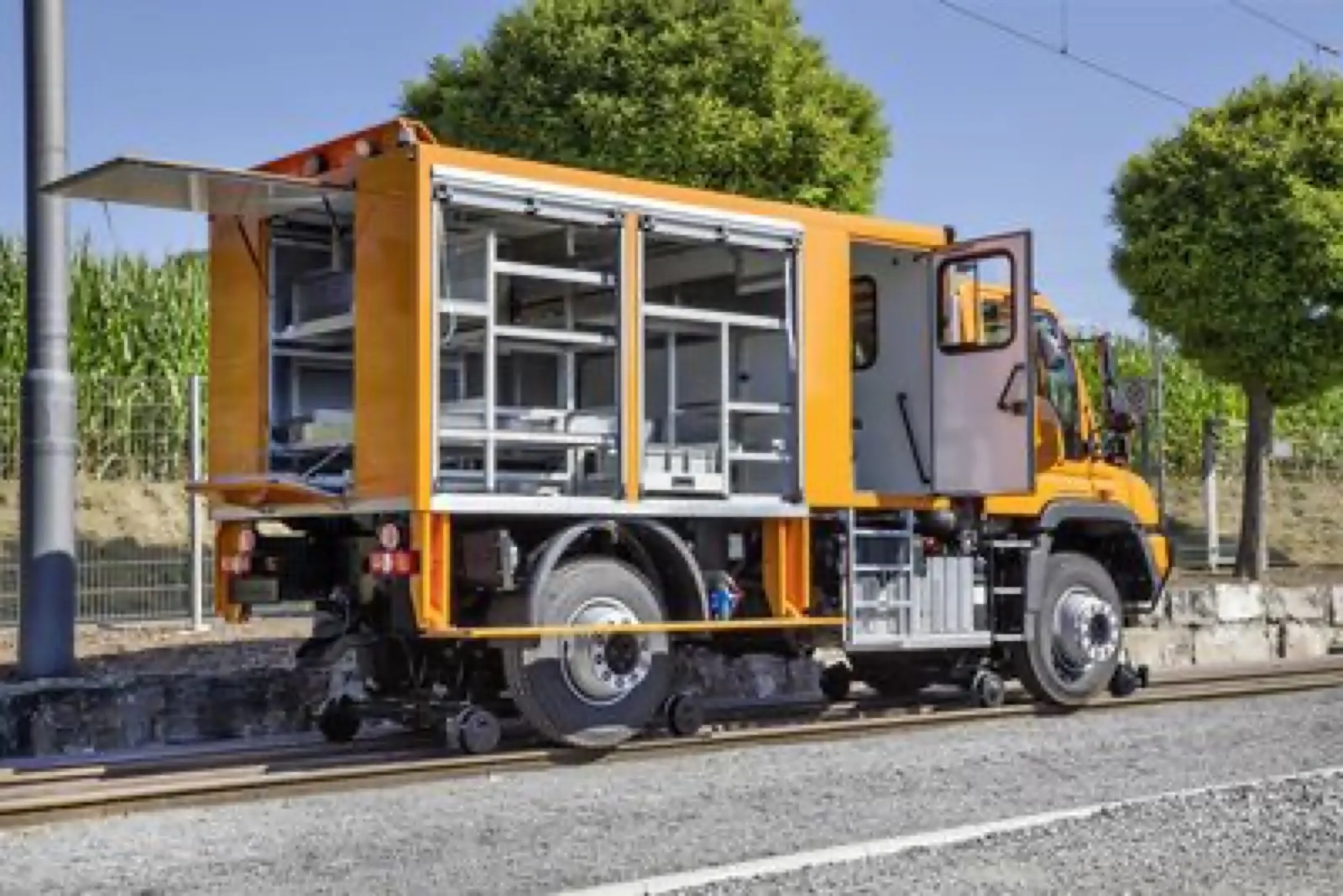
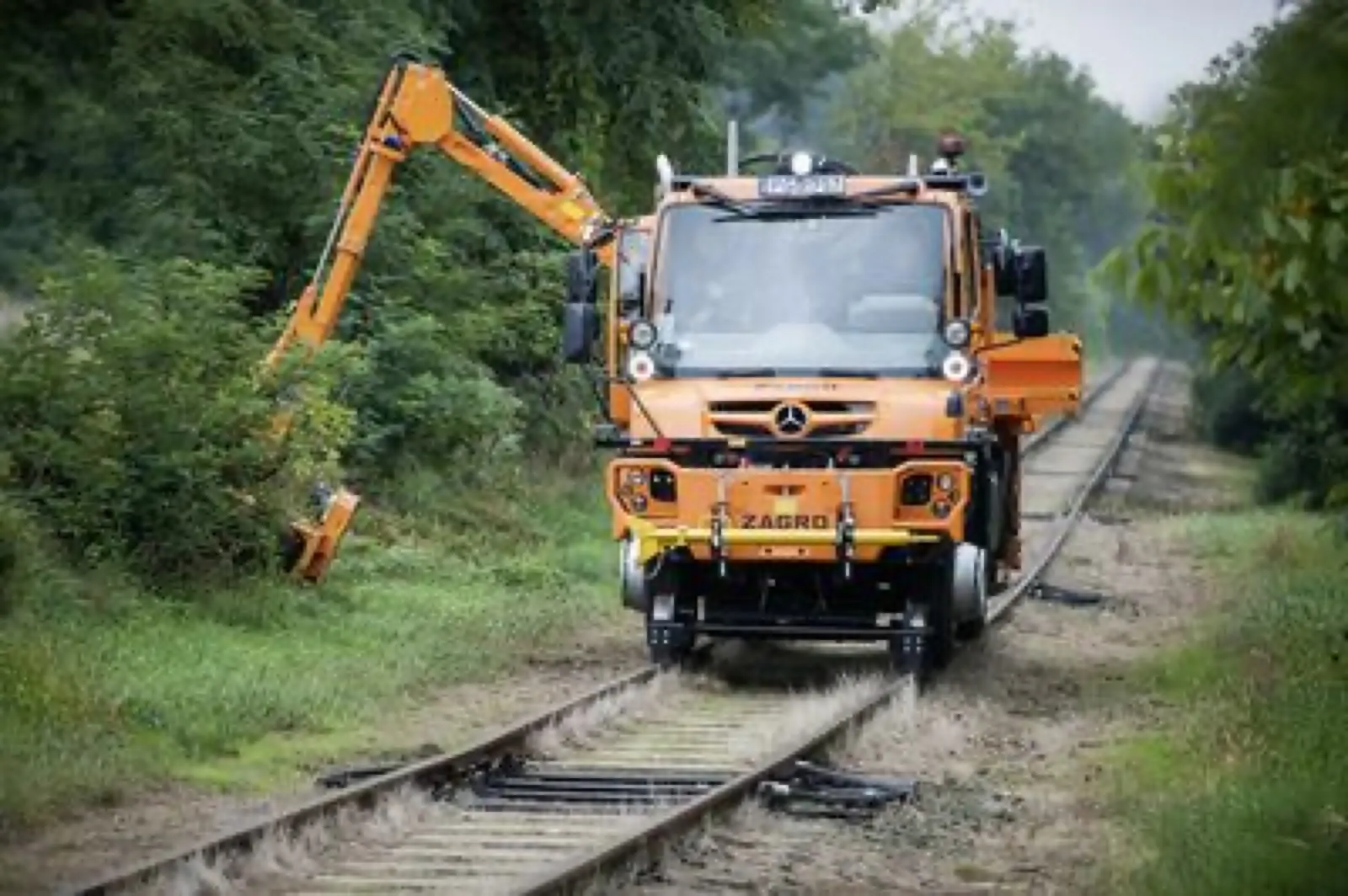
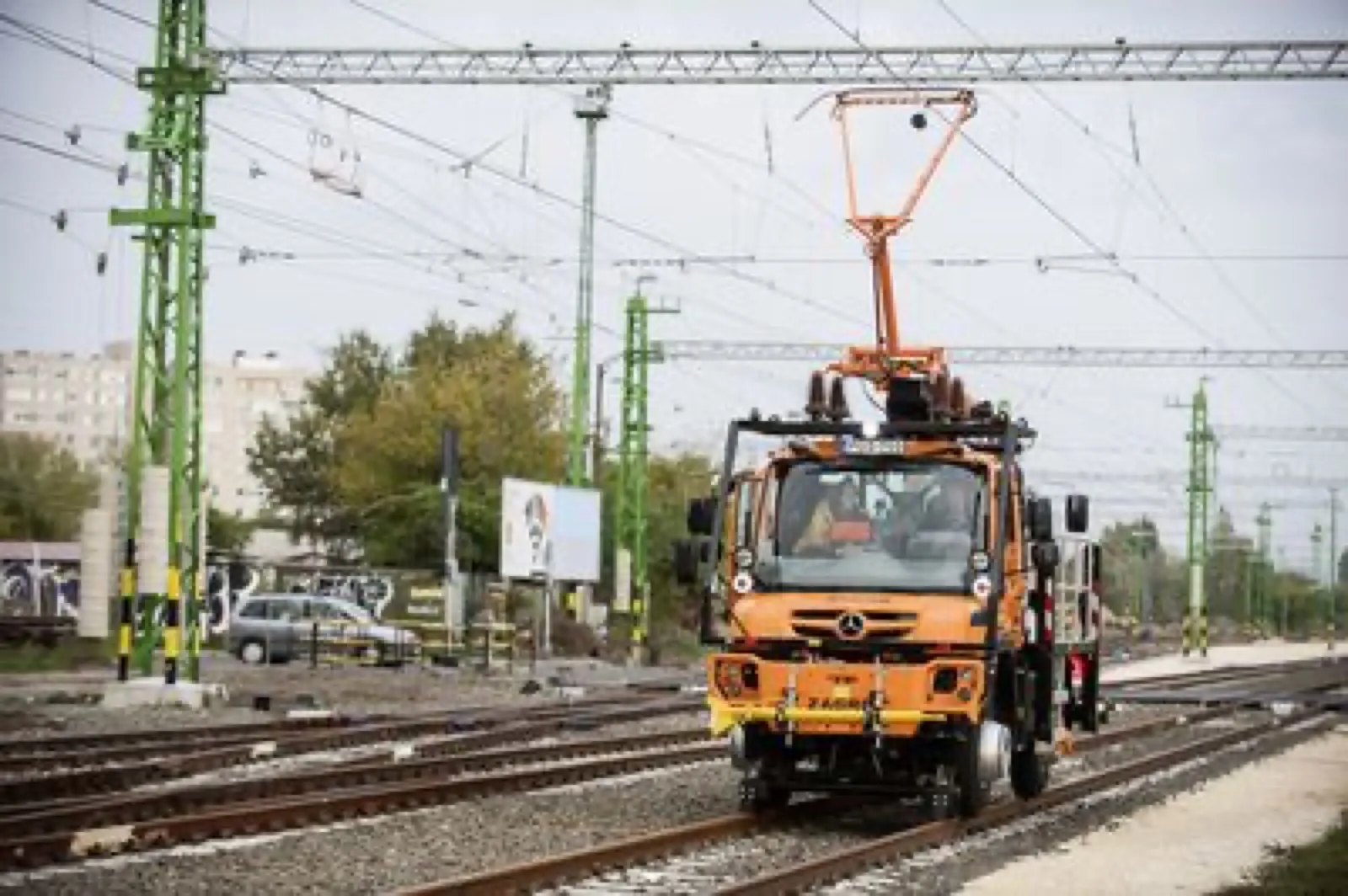
Photo credits: Mercedes-Benz AG