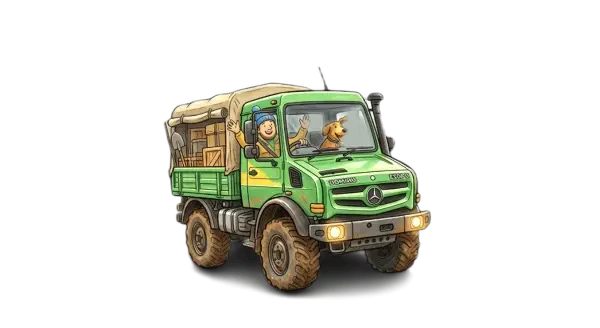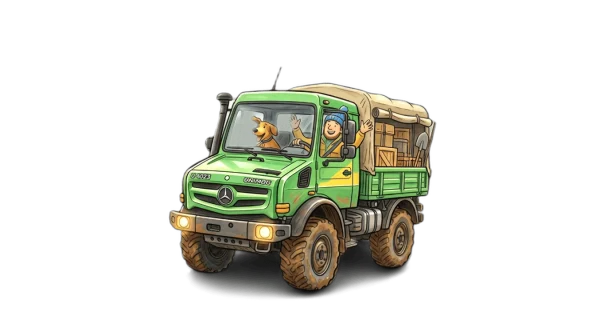
With the climate changes of recent years, natural disasters are becoming ever more frequent, and the situation risks getting worse. In 2017, heavy rain, snowstorms, and flooding caused more damage than ever before. Faced with a changing world, humanity must adapt and remain capable of rescuing people, despite rescue and evacuation operations that are growing increasingly complex.
To achieve this, rescue teams must use vehicles capable of reaching the most difficult terrain and equipped with advanced survival systems. In this regard, the Unimog proves to be the ideal machine, as we will discover.
Why is the Unimog the best rescue vehicle?
Floods, fires, avalanches, earthquakes — these are all uncontrollable events that can quickly take on dramatic proportions. While we may be powerless against the forces of nature, we can still do our best with the means available to us to deal with disasters and help those in need.
Rescue teams must reach inaccessible locations under any circumstances to assist victims: that is why the Unimog is the best solution. This vehicle stands out for its extraordinary off-road capabilities. It is also highly robust and flexible. It is a versatile, fast, and agile machine equipped with tools such as winches and an angled blade. All of this enables it to move across all types of terrain, whether muddy, snow-covered, flooded, full of ruts and bumps, and more.
In addition, the rescue Unimog is equipped with all the essential emergency equipment needed to care for victims.
The two main functions of the rescue Unimog
In rescue operations, the Unimog can primarily intervene on two fronts: as an ambulance and as a firefighting vehicle.
1) The Unimog as an ambulance
The Unimog U4023 model is perfectly suited for use as an ambulance. Where ordinary emergency vehicles reach their limits, the Unimog takes over. Fires, flooded or snow-covered roads, rubble and debris — this off-road vehicle is not deterred by obstacles.
During natural disasters or other accidents, victims often find themselves in hard-to-reach locations: in the mountains, among debris in flooded streets, in forests, or in muddy areas. A vehicle must be all-terrain but also robust and safe. Every mechanical system must therefore be designed to perform under the most demanding conditions: that is what the U4023 offers. If needed, it can even cross flooded areas up to 1.20 m deep. Moreover, it reaches 90 km/h on the road, which is quite respectable for a vehicle of this kind when responding to an emergency.
The Unimog U4023 is equipped with comprehensive medical equipment. Stretchers can be loaded and unloaded, and the superstructure can be accessed via a ladder. Inside, all the necessary emergency equipment is on hand, including a defibrillator, IV drips, a resuscitation system, and an emergency backpack.
2) The Unimog in firefighting
The Unimog U5023 is used for firefighting because it is extremely durable and can access any terrain. It is the highest-performing vehicle under difficult conditions. It serves as a means of transporting the crew and equipment, and it fights fires using centrifugal pumps, hydraulic tipping bodies, and other equipment.
It also features a self-protection system against fire, which covers the windscreen and tyres when flames approach the vehicle.
Its gearbox with off-road group allows it to respond rapidly to forest fires, enabling it to keep moving even at the lowest speeds.
The king of rescue
Without question, the Unimog is one of the best emergency response vehicles available today. It has everything a rescue vehicle needs, with the added advantage of its ability to access all types of terrain. Natural disasters are growing more frequent, but human beings know how to adapt and face them, in particular with the help of increasingly capable vehicles — and that is exactly what the Unimog represents today.
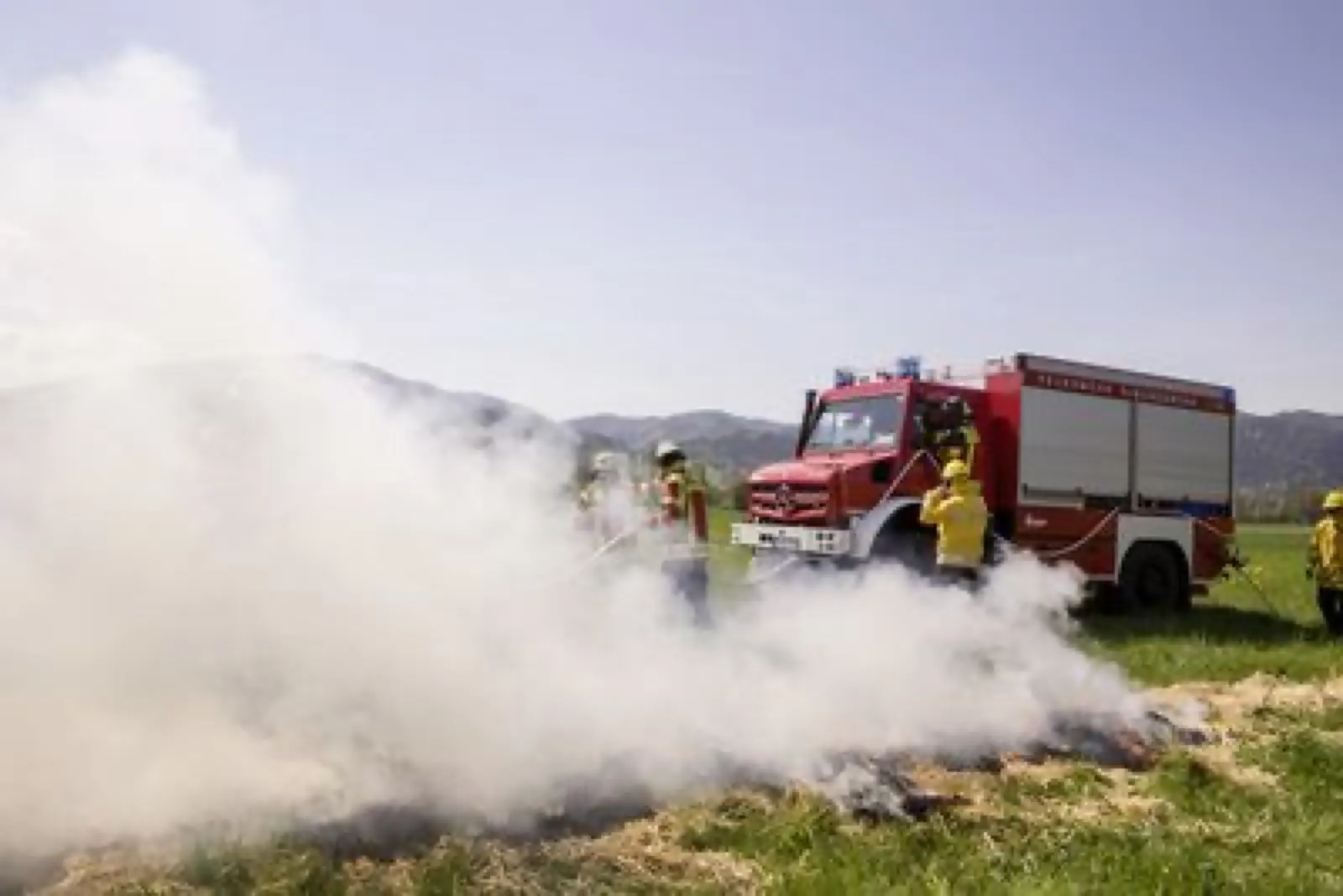
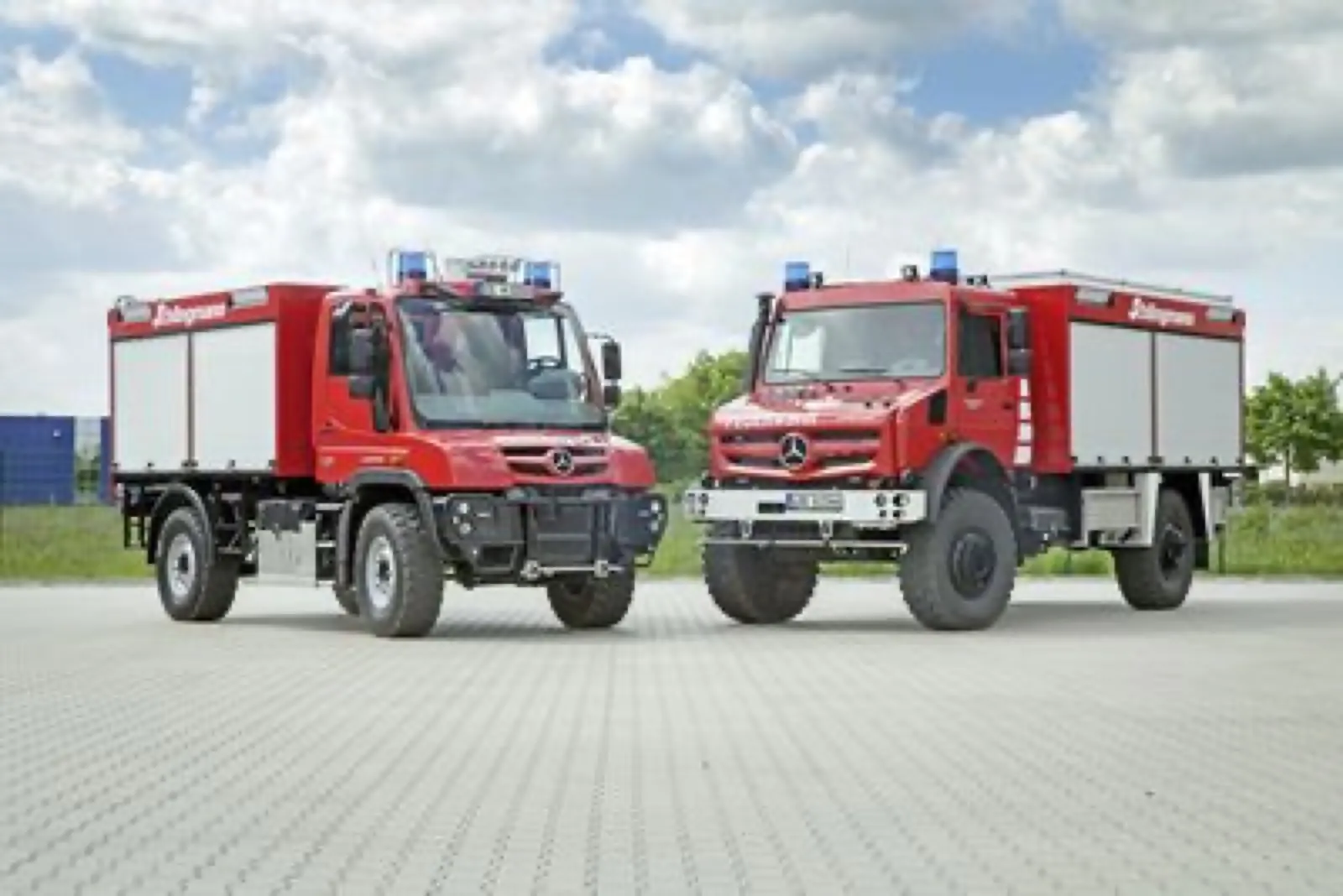
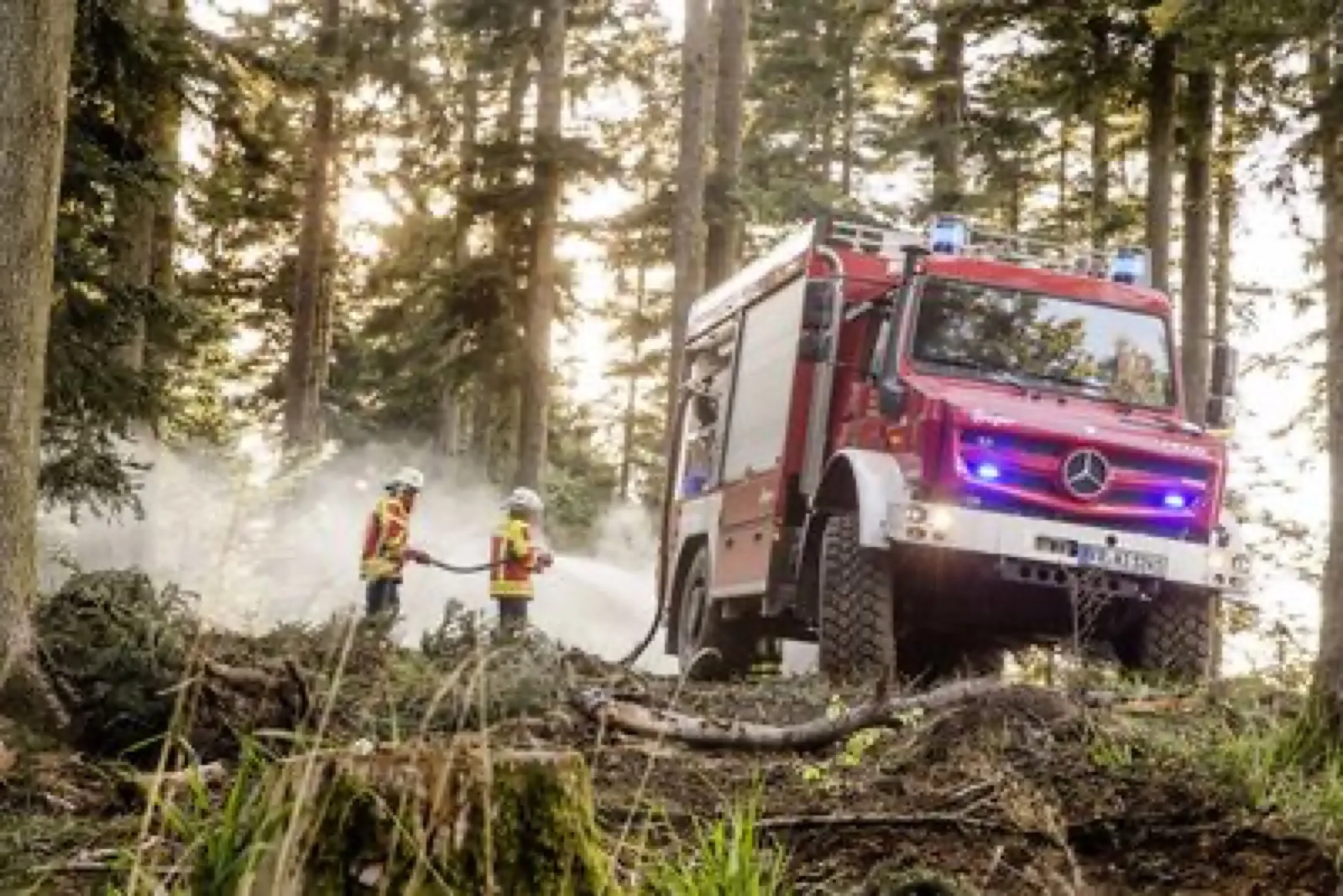
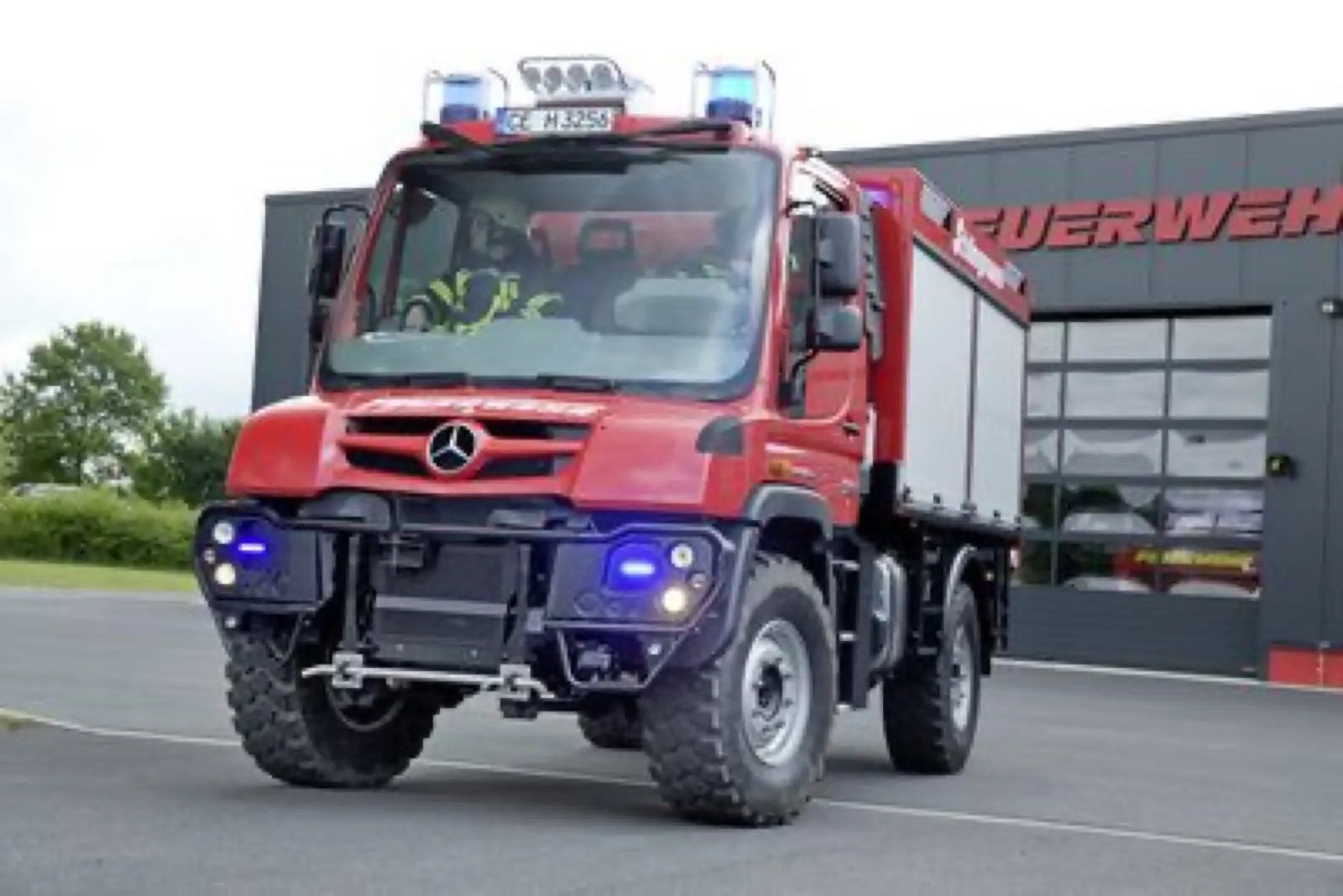
Photo credits: Mercedes-Benz AG